
Heathrow Airport's new security scanners use advanced Computed Tomography (CT) technology to create detailed three-dimensional images of cabin baggage, improving both security and passenger convenience.
A New Standard for Airport Security
Heathrow Airport has introduced advanced Computed Tomography (CT) security scanners across all passenger terminals, representing one of the most significant improvements to airport screening in recent years. The new technology has been implemented to strengthen aviation security while making the screening process quicker, simpler, and more convenient for millions of passengers travelling through the UK's busiest airport.
Unlike traditional X-ray systems, the latest scanners produce detailed three-dimensional images of cabin baggage, allowing security officers to inspect items with greater accuracy. This enhanced capability reduces unnecessary manual bag checks and helps improve the flow of passengers through security checkpoints.
Whether you are travelling for business, leisure, or an international connection, understanding how Heathrow Airport's new security scanners work can help you prepare for a smoother journey.
Why Heathrow Upgraded Its Security Scanners
As passenger numbers continue to grow, Heathrow remains committed to investing in technology that improves both security and customer experience. The rollout of CT scanners supports the airport's long-term strategy of delivering safer, more efficient, and more reliable airport operations.
The new screening technology has been introduced to.
- Strengthen aviation security.
- Improve baggage screening accuracy.
- Reduce manual luggage inspections.
- Speed up passenger processing.
- Minimise congestion at security checkpoints.
- Enhance the overall airport experience.
These improvements help Heathrow deliver a more modern and efficient journey while maintaining strict international security standards.
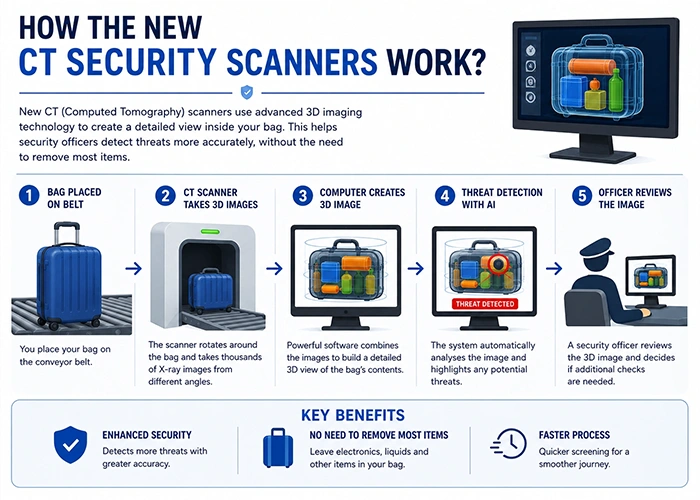
How the New CT Security Scanners Work
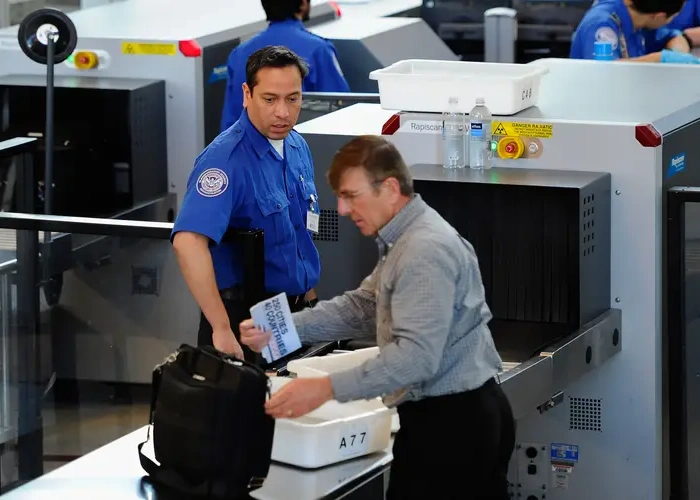
Computed Tomography technology creates high-resolution three-dimensional images of cabin baggage. Unlike conventional X-ray machines, security officers can rotate and inspect images from multiple angles without opening most bags.
This allows security teams to identify potential risks more effectively while reducing unnecessary secondary inspections.
For many passengers travelling through Heathrow, the new screening process means.
- Laptops and tablets can generally remain inside cabin baggage.
- Permitted liquids can usually stay inside hand luggage.
- Less preparation is required before entering security.
- Fewer plastic liquid bags are needed.
- Reduced waiting during peak travel periods.
- Faster movement through security lanes.
Passengers should always follow the instructions provided by Heathrow security staff, as additional screening may still be required when necessary.
Benefits for Every Traveller
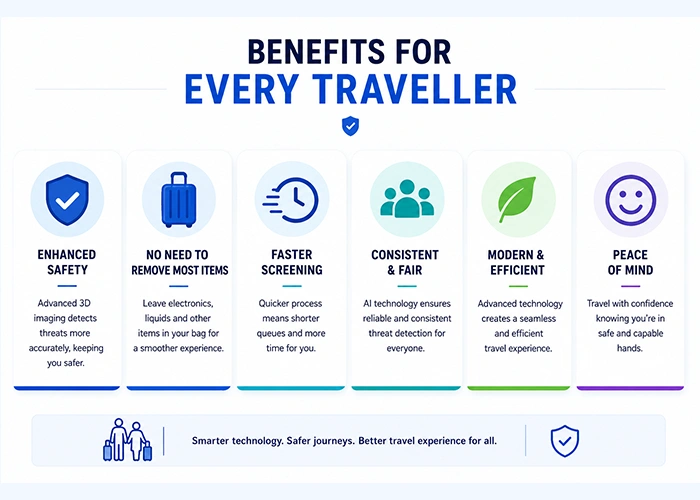
The introduction of Heathrow's new security scanners provides practical advantages for a wide range of passengers.
Business Travellers
Professionals carrying laptops, tablets, and work equipment benefit from a more streamlined screening process, helping them move through security with fewer interruptions.
Families
Parents travelling with children often find security easier to manage, especially when carrying multiple bags, pushchairs, and family essentials.
International Visitors
Passengers unfamiliar with Heathrow experience a clearer and more efficient screening process, helping reduce uncertainty before departure.
Frequent Flyers
Regular travellers benefit from greater consistency, shorter preparation times, and improved passenger flow throughout the terminal.
What Has Changed for Passengers?
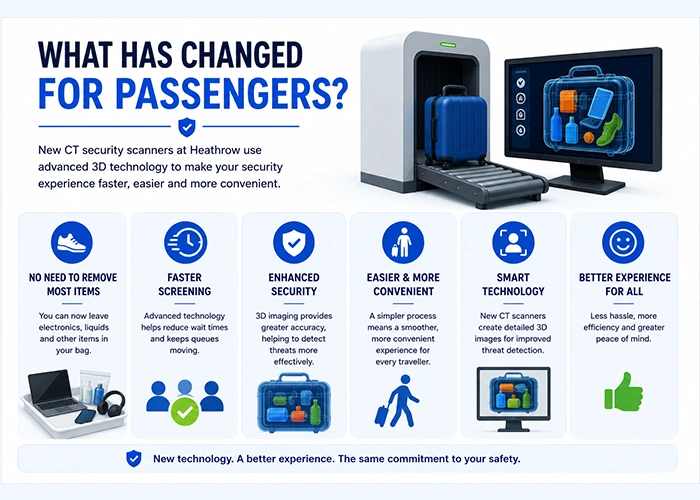
The introduction of Heathrow's CT security scanners has modernised several aspects of airport screening.
Passengers may notice.
- A simpler cabin baggage screening process.
- Reduced need to remove electronic devices.
- Greater convenience when carrying permitted liquids.
- Improved organisation within security areas.
- Shorter preparation times before screening.
- More efficient movement through security checkpoints.
These changes are designed to improve convenience without compromising passenger safety.
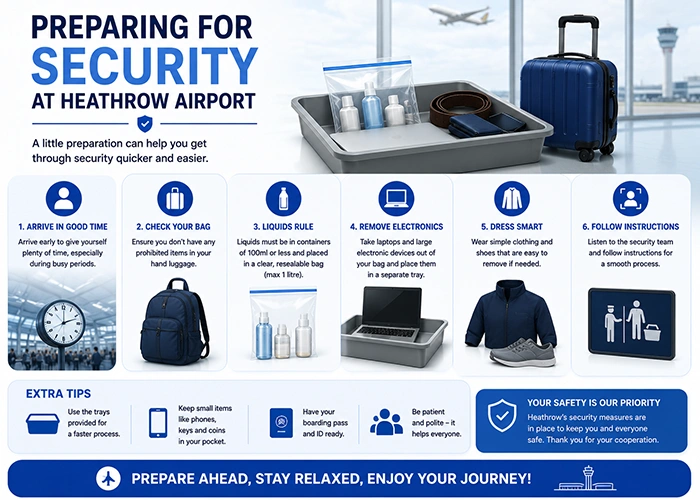
Preparing for Security at Heathrow Airport
Although the screening process has become more efficient, preparing before you travel remains important.
Before arriving at Heathrow Airport, passengers should.
- Check the latest Heathrow security guidance.
- Confirm their airline's cabin baggage allowance.
- Keep passports and boarding passes readily accessible.
- Arrive at the airport within their airline's recommended check-in time.
- Follow instructions from security officers throughout the screening process.
- Verify destination-specific travel requirements where applicable.
Good preparation helps minimise delays and contributes to a smoother airport experience.
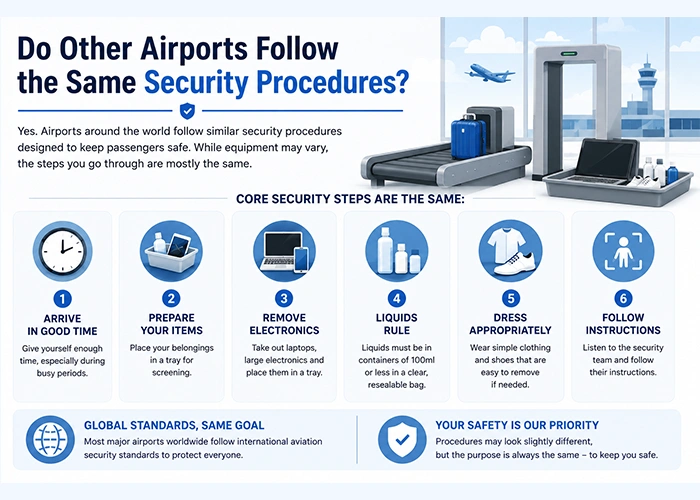
Do Other Airports Follow the Same Security Procedures?
Not every airport currently operates the same security technology. While Heathrow has completed the rollout of advanced CT scanners across all passenger terminals, some UK and international airports may continue using traditional screening systems.
Passengers travelling on return flights should always check the security requirements at their departure airport, as regulations relating to liquids, electronic devices, and cabin baggage may vary depending on local security procedures.
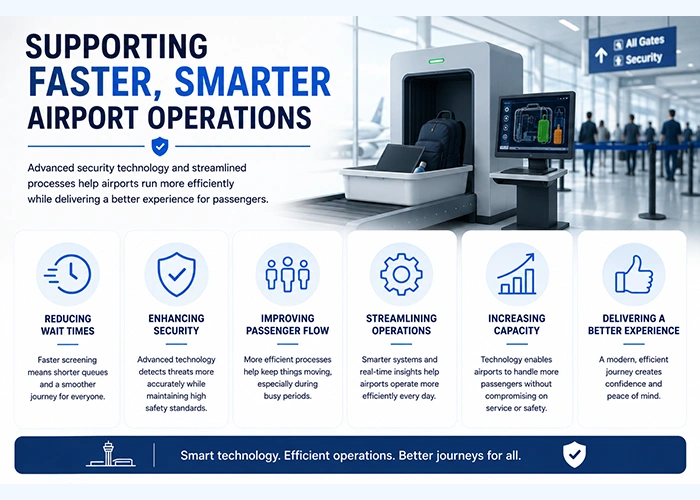
Supporting Faster, Smarter Airport Operations
The benefits of Heathrow's new security scanners extend beyond passenger convenience.
The upgraded technology also helps the airport.
- Improve passenger throughput.
- Reduce congestion during busy travel periods.
- Enhance baggage screening accuracy.
- Optimise security resources.
- Improve operational efficiency.
- Support future passenger growth.
These improvements contribute to Heathrow's position as one of the world's leading international airports.
 =
=
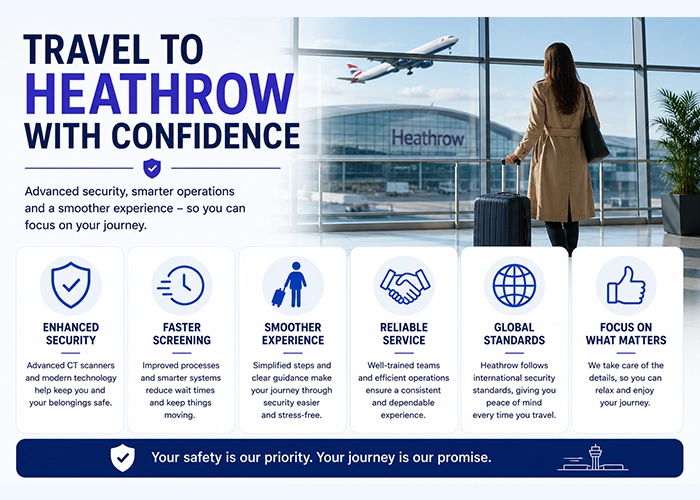
Travel to Heathrow with Confidence
A successful journey begins before you arrive at the airport. Booking reliable transport allows you to reach Heathrow comfortably and on time, giving you plenty of opportunity to complete check-in and security without unnecessary stress.
Whether travelling from home, a hotel, or your workplace, choosing a professional airport transfer offers dependable collection times, fixed pricing, experienced drivers, luggage assistance, and a comfortable journey directly to your terminal. Planning your transport in advance helps eliminate uncertainty and allows you to begin your trip with confidence.
Frequently Asked Questions
You should find answers to your questions here. If not, please chat with our operator by clicking the chat button.
Do I need to remove my laptop during security screening?
In most cases, passengers using Heathrow's CT security scanners can leave laptops and other large electronic devices inside their cabin baggage unless additional screening is requested.
Can liquids remain inside my hand luggage?
Under Heathrow's updated screening procedures, permitted liquids can generally remain inside cabin baggage. Passengers should always check the latest Heathrow guidance before travelling.
Are the new scanners faster than previous security systems?
Yes. The new technology reduces preparation time, improves passenger flow, and helps minimise unnecessary manual baggage inspections.
Are Heathrow's CT scanners safe?
Yes. The scanners comply with international aviation security standards and provide enhanced threat detection while improving the overall passenger experience.
Have all Heathrow terminals been upgraded?
Yes. Heathrow has completed the rollout of advanced CT security scanners across all passenger terminals.
Will every airport use the same security procedures?
No. Security requirements vary between airports, so passengers should always check the latest guidance before both outbound and return journeys.
Should I still arrive early for my flight?
Yes. Although security processing is now more efficient, passengers should continue following their airline's recommended arrival times.
Do the new scanners reduce waiting times?
The new CT technology has been introduced to improve queue management and reduce delays, particularly during busy travel periods.
How can I make my Heathrow Airport journey even easier?
Planning ahead, checking Heathrow's latest security guidance, organising your cabin baggage, and booking reliable airport transport in advance will help ensure a smooth, efficient, and stress-free travel experience.